
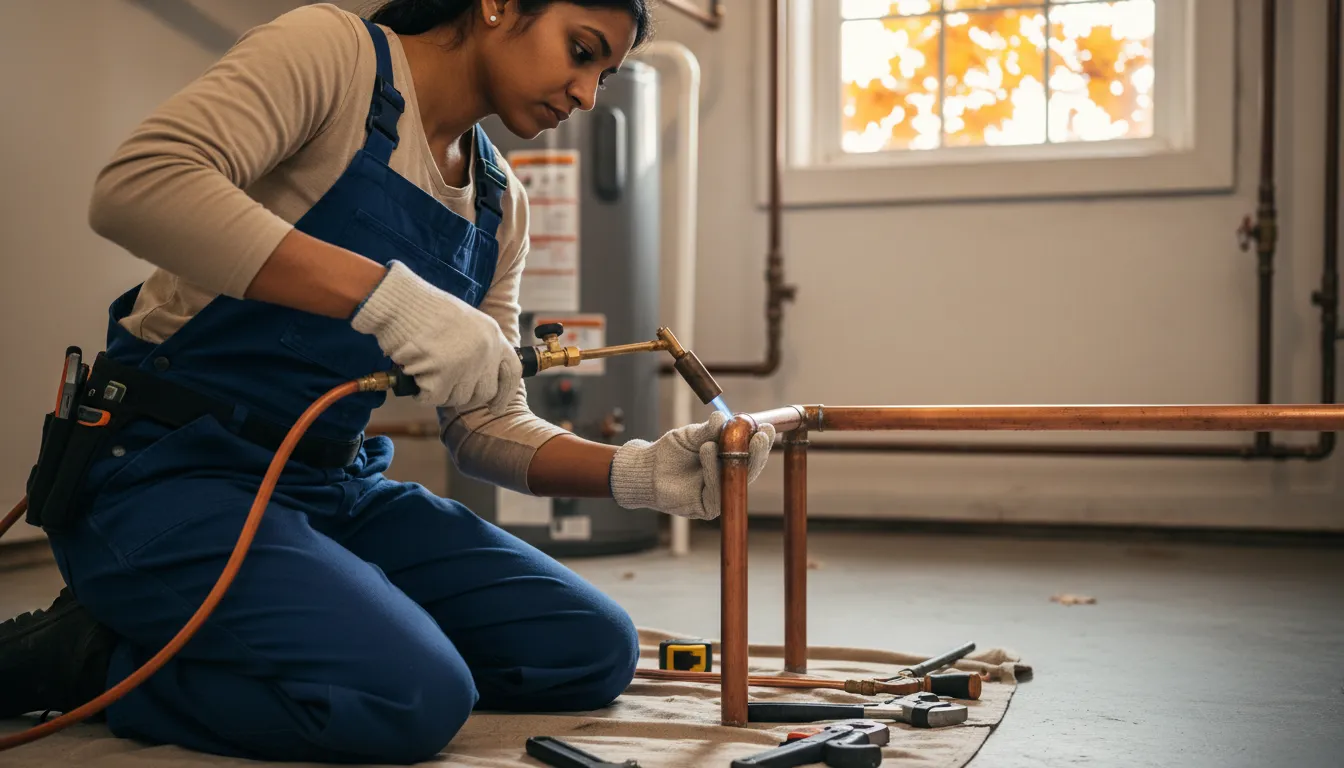
Drain Cleaning Diagnosed by Camera, Not by Assumption
A cleared drain that clogs again in three months wasn't actually fixed. We identify what's narrowing or blocking the line before we clear it.
Free estimates · Same-day service available · No obligation
Drain Behaviour Depends on What's Actually in the Ground
A slow kitchen sink in a 1920s Leslieville home and a slow kitchen sink in a 2018 Etobicoke condo are, mechanically, two different problems. We start by understanding the drainage material and layout before selecting a clearing method.
Cast-iron tuberculation
Older cast-iron stacks, common in Toronto homes built before the 1970s, corrode internally over decades, narrowing the effective diameter. Standard snaking may clear a clog temporarily without addressing this narrowing.
Grease and cold-weather solidification
Cooking grease that would stay semi-liquid in a warmer climate solidifies faster in Ontario's cooler indoor plumbing runs during winter months, contributing to kitchen line blockages.
Root intrusion on older laterals
Mature street trees along established Toronto neighbourhoods send roots toward clay or Orangeburg laterals seeking moisture, particularly during dry summer stretches.
Bathroom line buildup in hard-water areas
Depending on the municipal water source, mineral scale can accumulate inside smaller-diameter bathroom drain lines, especially where slope is already marginal.

Repeated Clogging Usually Means an Untreated Root Cause
When a drain clears and then slows again within weeks, the clearing method addressed the blockage but not what's producing it. This is common with root intrusion, structural bellies in a line, or ongoing grease accumulation. Continually re-clearing the same drain without diagnosis is a cycle that costs more over time and delays identifying a developing pipe failure.
We Scope Before We Clear, When the Pattern Warrants It
For recurring or slow-developing clogs, we use camera inspection to see what's actually happening inside the line, whether that's a belly, a root mass, or scale buildup. We explain what we find and recommend a clearing method matched to the cause, whether that's hydro-jetting, mechanical snaking, or, in cases of structural line failure, a repair referral.
Our Drain Cleaning Process
A consistent method whether the issue is a single slow fixture or a recurring main-line backup.
- 1
Describe the pattern
Email us details on which fixtures are affected and how long the slowness or backup has been occurring.
- 2
On-site assessment
We test flow at the affected fixtures and determine whether the issue is localized or part of a larger line problem.
- 3
Camera inspection where warranted
For recurring or main-line issues, we run a camera to identify the actual obstruction or structural cause.
- 4
Clearing matched to cause
We select snaking, hydro-jetting, or another method based on what the inspection shows, not a default approach.
Why Our Drain Cleaning Approach Holds Up
We're accountable to the diagnosis we give you, which is why we verify before we conclude a job is finished.
Licensed & Insured
All drain work performed by licensed technicians under full liability coverage.
Camera Verification
We use inspection cameras to confirm clearing rather than assuming based on flow alone.
Material-Specific Method
Our clearing method is chosen based on your line's actual material and condition.
Written Findings
You get a plain explanation of what caused the blockage before we close out the job.
Seasonal Judgment
We account for grease solidification and freeze-related slowdowns typical of Ontario winters.
Root-Aware Scoping
For older laterals, we assess root intrusion risk rather than treating it as a one-time clear.
Drain Cleaning Questions
Why does my drain keep clogging after it's cleared?
Recurring clogs usually indicate an unaddressed cause, such as root intrusion, a structural belly in the line, or ongoing grease buildup. We recommend camera inspection for any drain that has needed clearing more than once.
Do you serve older Toronto homes with cast-iron drains?
Yes. Cast-iron and clay drainage common in older Toronto and inner-suburb housing require a different clearing approach than modern PVC, and we adjust our method accordingly.
Is camera inspection included with every drain cleaning?
We use it selectively, particularly for recurring issues or main-line concerns. For a single, clearly isolated clog, it may not be necessary, and we'll explain that reasoning on site.
Can tree roots really get into my sewer line?
Yes, particularly with older clay or Orangeburg laterals near mature trees, which is common in many established GTA neighbourhoods. Roots are drawn to the moisture and small gaps in aging pipe joints.
How quickly can you respond to a backed-up drain?
Response time depends on severity and location within the GTA. Email us with the details and we'll confirm the earliest available appointment.
Get Your Drain Assessed, Not Just Cleared
Email us the symptoms and how long they've been happening, and we'll recommend the right approach.
Email Us for a Free EstimateLocal conditions matter — email us for same-day service.
Fall home-service conditions in Toronto, ON
Fall around Toronto, ON is the season to prepare your home before winter sets in.
Proudly Serving Toronto, ON
Local, on-time service throughout Toronto and the surrounding area.