

Locating a Leak Precisely, Before Any Drywall Comes Down
We use pressure testing and acoustic tracing to pinpoint concealed leaks, so repair work is targeted rather than exploratory.
Free estimates · Same-day service available · No obligation
Concealed Leaks Behave Differently Depending on Where They're Hiding
A slab leak in a post-war Toronto bungalow presents differently than a wall-cavity leak in a newer Vaughan build, and our tracing method adjusts accordingly.
Slab leaks in older bungalows
Homes built directly on a concrete slab, common in parts of Scarborough and Etobicoke, can develop under-slab supply leaks that show up as warm spots on flooring or unexplained water bills rather than visible water.
Wall cavity leaks in older masonry homes
In older brick homes across central Toronto, a slow supply line leak inside a wall cavity can travel along framing before surfacing at a baseboard, making the visible damage point misleading.
Freeze-related pinhole leaks
A pipe stressed by a hard freeze earlier in the season can develop a pinhole leak that only becomes noticeable weeks later as it slowly worsens under normal water pressure.
New-build leaks at fitting joints
In newer GTA construction, leaks more often originate at a fitting or connection point rather than pipe failure itself, which changes where we focus the initial trace.

Guessing at a Leak Location Means Unnecessary Demolition
Without proper tracing, finding a concealed leak often defaults to opening drywall or flooring at the point where water is visible, which is frequently not where the leak originates, since water travels along framing and slab before surfacing. This results in repeated openings, higher repair costs, and drywall or flooring damage well beyond what the actual leak required.
We Trace First, Then Open Only What's Necessary
Using pressure testing to confirm a leak exists in a given zone, followed by acoustic listening equipment to narrow the location, we identify the leak's actual position before recommending any opening of walls or flooring. This keeps repair work targeted and avoids unnecessary reconstruction costs.
Our Leak Detection Process
A methodical sequence that prioritizes precision before any invasive step.
- 1
Describe the symptoms
Email us what you've noticed, whether that's a damp spot, a sound, or an unexplained rise in your water bill.
- 2
Pressure testing
We isolate zones of the system and test pressure to confirm where a leak is occurring.
- 3
Acoustic tracing
Listening equipment narrows the leak's precise location along the suspected line.
- 4
Targeted access
We open only the specific section of wall, floor, or slab needed to reach the confirmed leak point.
- 5
Repair and verification
The leak is repaired and the line is pressure-tested again to confirm the fix holds.
Why Precision Matters in Leak Detection
Every wall we don't need to open is money and disruption saved for the homeowner.
Licensed & Insured
Leak detection carried out by licensed technicians with full liability coverage.
Non-Invasive First
We trace acoustically and by pressure before recommending any opening of walls or floors.
Slab and Wall Expertise
Our tracing method adjusts for slab-on-grade versus wall-cavity leak behaviour.
Written Location Summary
You receive a clear explanation of where the leak is and why, before repair begins.
Freeze-Aware Diagnosis
We consider seasonal freeze stress as a possible origin for pinhole leaks.
Water Loss Reduction
Early detection limits ongoing water waste and the damage it causes over time.
Leak Detection Questions
How do you find a leak without opening walls?
We use pressure testing to isolate which zone of the plumbing system is losing water, then acoustic listening equipment to pinpoint the exact location along that line before recommending any opening.
What are signs I might have a concealed leak?
Unexplained increases in your water bill, warm spots on slab flooring, a persistent damp smell, or the sound of running water when no fixtures are in use are common indicators.
Is leak detection necessary before repair, or can you just open the wall?
Detection first avoids unnecessary demolition. Water often travels along framing or slab before surfacing, so the visible damage point is frequently not the actual leak location.
Do slab leaks happen often in Toronto-area homes?
They occur in properties built on a concrete slab, which is common in certain postwar Toronto and inner-suburb construction, particularly where original supply lines have aged.
How fast should I act on a suspected leak?
Sooner is better. A small leak left untraced can worsen gradually, particularly under normal daily water pressure, leading to more extensive damage over time.
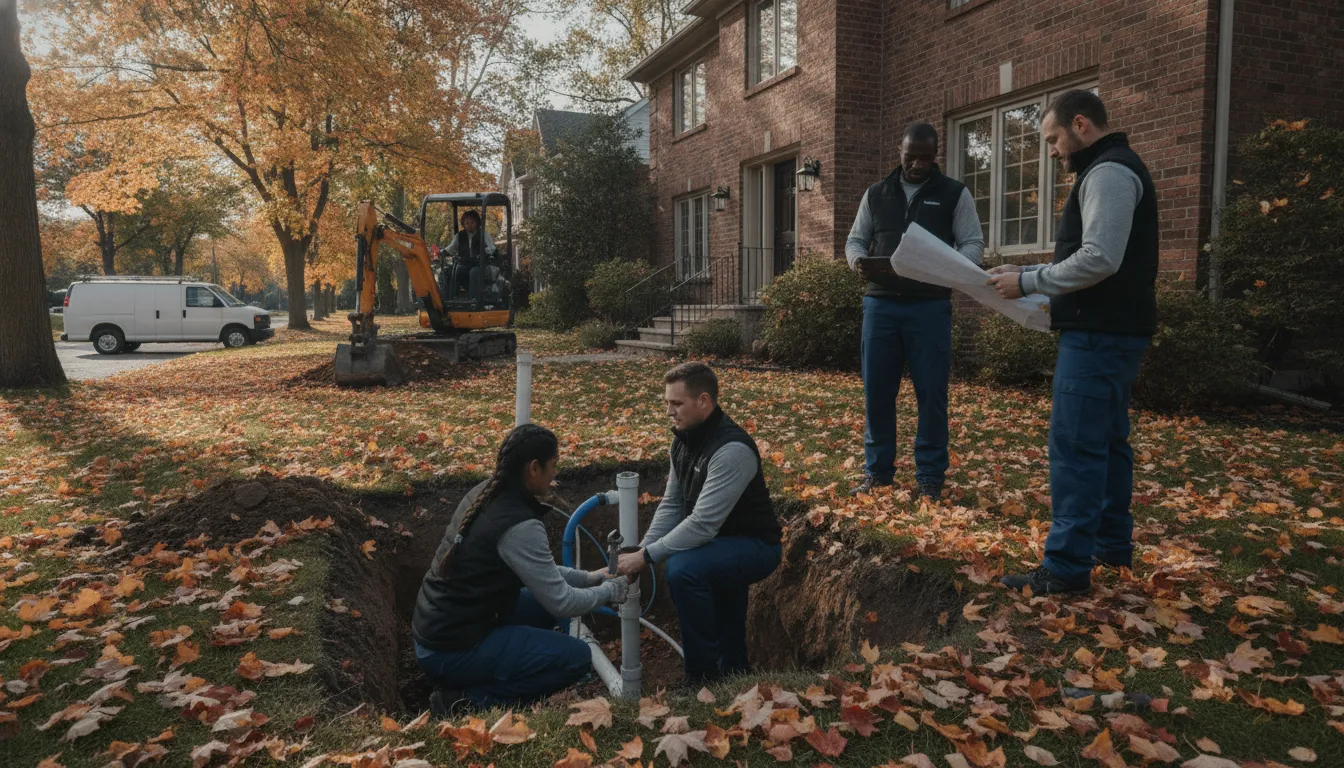
Suspect a Hidden Leak? Let's Trace It Precisely
Email us what you've noticed, and we'll walk you through the detection process.
Email Us for a Free EstimateLocal conditions matter — email us for same-day service.
Fall home-service conditions in Toronto, ON
Fall around Toronto, ON is the season to prepare your home before winter sets in.
Proudly Serving Toronto, ON
Local, on-time service throughout Toronto and the surrounding area.